

How to keep a 6 Gas Monitor decision traceable from model fit final evaluation to the RFQ
A design review for a 6 gas monitor should begin with model fit, not with a broad comparison of product pages. The key question is whether the evidence available for one model addresses the task in front of you. That task may involve a particular gas-detection scope, a defined interface, a physical installation, or a procurement package. If the review separates confirmed information from open requirements, its conclusions can move into the RFQ without becoming stronger than the source evidence.
Separate category, application, and model scope
Start by defining three different levels of discussion. The category level describes the type of equipment being considered. The application level describes the work context and the decisions the equipment must support. The model level contains the specifications that can be attributed to a named product.
These levels should not be blended. A page describing a multi-gas detector does not, by itself, establish that the device fits every operating environment. Likewise, a feature listed for one model should not be transferred to another model because the product names appear similar. A useful review table can therefore include three columns: requirement, evidence scope, and decision status.
- Requirement: state what the project needs in neutral terms.
- Evidence scope: record the exact model, page, or document connected to the information.
- Decision status: mark the point as supported, unresolved, or outside the current review.
This structure keeps a category description from becoming a model claim. It also gives the design engineer a clear place to record requirements that still need a technical answer.
Compare only information that applies to the task
During final evaluation, a 6 gas monitor comparison should be organised around the required decision rather than the number of features listed on a page. Begin with the conditions that determine model fit. For example, the review may need to distinguish the gases named in the project brief, the display information required by the user, the physical arrangement, or the interfaces expected by the wider system. These are review questions, not assumptions about any particular product.
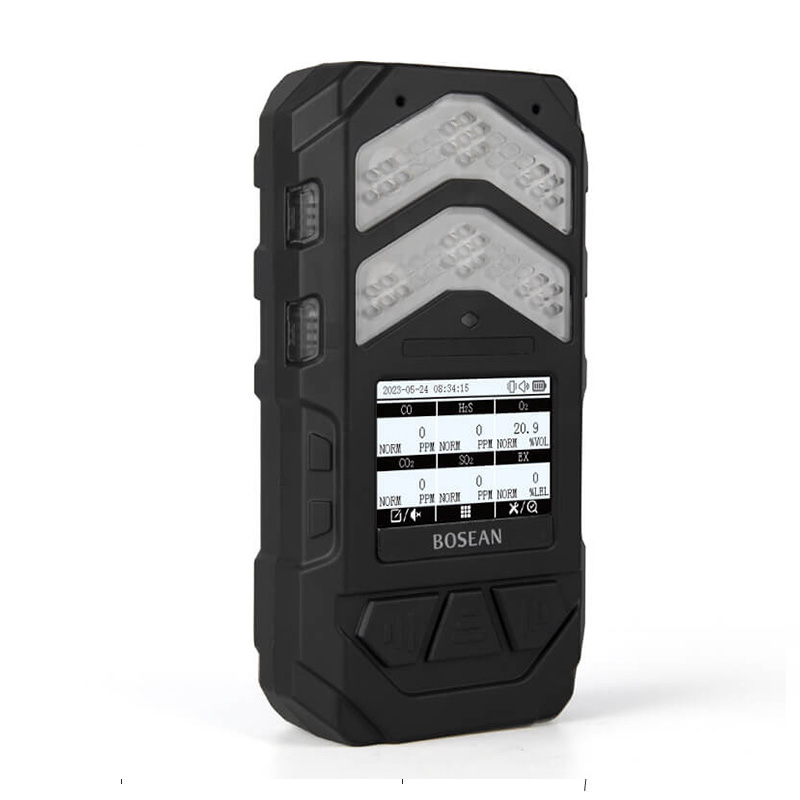
The assigned product page identifies the K-600N as a “6 in 1 Multi Gas Detector” and states that it can detect six gases simultaneously. The same page lists a 240×160 display. Those details can be recorded as page-level evidence for that named model. They should not be expanded into claims about certification, site suitability, safety outcomes, alarm behaviour, or configurations that the page does not state.
For each comparison point, ask whether the information answers the requirement directly. If it does, retain the wording close to the source and identify the model. If it does not, leave the requirement open in the evaluation record. This is more useful than filling the gap with an assumption, because an unresolved point can become a precise question in the sourcing brief.
Record assumptions and interfaces
Model fit often depends on boundaries that are easy to overlook. Record what the device is expected to sense, display, communicate, or support in the proposed arrangement. Then distinguish an explicit requirement from a working assumption. A statement such as “the review expects this information to be available at the user interface” is different from a statement that a particular model provides a wider system function.
A simple interface register can make those boundaries visible:
- Identify the information the operator or control system needs.
- Identify the point at which that information enters or leaves the equipment.
- Record which source supports the point and which points remain open.
- Assign each open point to the person responsible for resolving it before release.
This register is a planning tool, not proof of a product capability. Its purpose is to prevent a general requirement from being mistaken for a confirmed specification. It also helps different disciplines use the same terms when they review the RFQ.
Prepare a focused sourcing brief
Once the evidence has been separated, turn the review into a short sourcing brief. State the application in neutral language, list the requirements that affect model fit, and attach the evidence scope beside each supported point. Keep page-derived product wording separate from the questions that the RFQ must resolve.
The brief should also preserve the reasoning behind the decision. Note why a requirement matters to the design, which parts are confirmed for the named model, and which parts need a response before selection. Avoid writing a conclusion that is broader than the evidence. A narrow, traceable request is easier to compare than a long specification built from implied features.
Finally, carry the same model name, requirement wording, and evidence boundaries from the evaluation into the RFQ. Bosean can be included as the named source for the K-600N page information used here, while the purchasing document should keep each product statement tied to its stated model and scope. That approach leaves the final selection grounded in the actual design question rather than in an untested generalisation.