

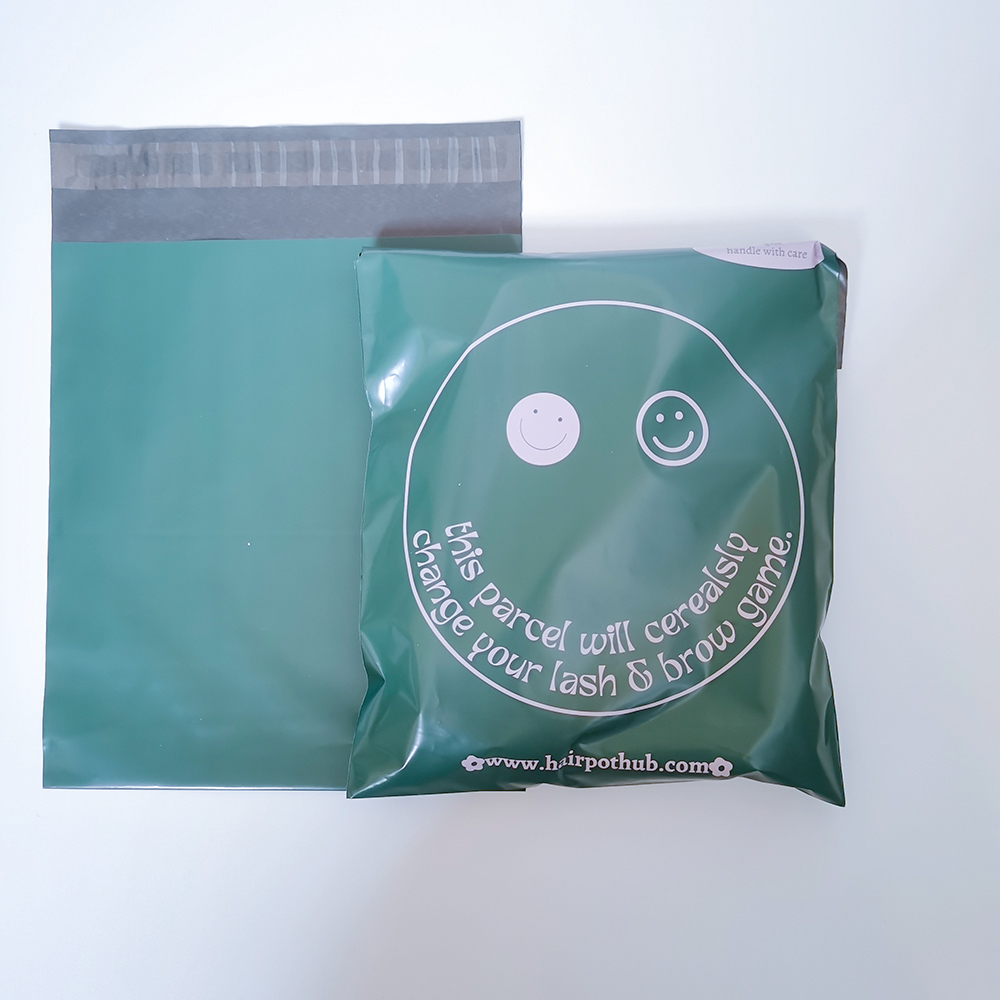
Framework rationale: why a structured approach is necessary
Organizations moving from conventional polyethylene mailers to sustainable alternatives require a structured decision framework to balance environmental goals, cost, and operational compatibility. A framework clarifies trade-offs between materials, end-of-life pathways, and carrier handling constraints. For teams evaluating options, it is useful to compare conventional and specialty products — for example standard colored poly mailers versus compostable or mono-material alternatives such as some pink poly mailers — across consistent metrics (recyclability, tensile strength, barrier performance, and cost per unit). The need for such rigor became apparent after disruptions to global recycling flows following China’s 2018 National Sword policy, which permanently altered accessible end-of-life routes for many polymer grades and forced brands to re-evaluate packaging specs.
Core components of the transition framework
The framework comprises four principal components: material selection, design-for-recycling, supply-chain validation, and performance verification. Material selection assesses resin chemistry (e.g., LDPE, mono-polyolefin blends, compostable polyester), availability of post-consumer recycled (PCR) feedstock, and compatibility with existing automated sortation. Design-for-recycling emphasizes mono-material construction, labeled adhesion areas, and minimal multi-layer laminates. Supply-chain validation covers lead times, supplier certifications, and change-management clauses. Performance verification requires mechanical testing (tensile strength, puncture resistance), barrier testing, and acceptance trials on carrier sorting and customer returns processes.
Material options and trade-offs
Three material pathways dominate practical transitions: upgraded recyclable polyolefins, certified compostables, and mono-layer coextrusions engineered for recycling. Each has trade-offs. Upgraded polyolefins (often high-density or modified LDPE) preserve existing production lines and recycling streams but may need PCR input to meet circularity claims. Certified compostables meet ASTM or EN standards but rely on industrial composting infrastructure and are not appropriate for mixed-waste recycling streams. Mono-layer films simplify sorting and increase recyclability but can reduce barrier performance unless formulation adjustments are made. Choose based on your downstream waste infrastructure and the most likely end-of-life stream for your market.
Design and labeling: ensure material intent is recognized
Design choices materially affect recyclability. Favor mono-material constructions, minimize ink coverage, and position adhesive windows to avoid contaminating recycling bales. Use clear, standardized labeling that indicates whether an item is recyclable, compostable (industrial vs. home), or contains PCR content. Do not rely on ambiguous language — collectors and consumers need precise cues. And remember: coatings and special adhesives can negate otherwise recyclable substrates. —
Operational validation: testing that prevents surprises
Operational validation is where many programs fail. Establish acceptance criteria early and require supplier-provided data plus in-house trials: chute and sortation tests, carrier handling simulations, and fill-line compatibility checks. Verify that closure integrity and print adhesion survive automated sorting and washing stages if your mailers are expected to enter material recovery facilities. Confirm tensile and puncture metrics align with shipment profiles; a lower-cost film that rips at high drop heights creates returns and reputational cost that outweighs raw savings.
Supply-chain and policy considerations
Supply resilience and regulatory alignment are central. Monitor local regulations (extended producer responsibility schemes, deposit-return, and composting facility availability) and incorporate contractual protections for lead-time variability and raw-material volatility. Post-2018 shifts in global recycling markets mean domestic end-of-life infrastructure should factor heavily into vendor selection — a change in policy or a regional processing bottleneck can turn an otherwise circular product into contaminated waste streams overnight. Consider suppliers who can provide PCR certification, chain-of-custody documentation, and batch testing to support compliance and claims.
Common mistakes to avoid
Typical errors include: (1) selecting a compostable film without verifying industrial composting access; (2) mixing labels and adhesives that contaminate recycling; and (3) omitting carrier trials that replicate real-world handling. These mistakes are avoidable with a prescriptive test plan and stakeholder alignment across procurement, operations, sustainability, and logistics. —
Implementation roadmap: phased actions and KPIs
Apply a phased rollout with defined KPIs to reduce operational risk: pilot (100–1,000 units) to validate carrier handling and customer perception; scale (10k–100k units) to optimize cost and supply; full deployment when KPIs consistently meet targets. Useful KPIs: percent of parcels accepted by sorting centers, first-time pass rate on fill line, customer return rate due to packaging failure, and verified end-of-life diversion rate (recycle/compost). Use periodic supplier audits and random-batch testing to maintain control over material performance and circularity claims.
Summary of framework benefits
Adopting this framework converts sustainability goals into operational requirements: clear material selection criteria, testable design rules, validated supply resilience, and measurable deployment metrics. The approach reduces ambiguity and aligns procurement, operations, and sustainability teams around a repeatable path to circularity.
Advisory: three critical evaluation metrics (golden rules)
1) End-of-life pathway alignment: Verify that the chosen material matches available local processing (recycling or industrial composting), not just global claims. 2) Operational compatibility: Require carrier and fill-line acceptance tests as preconditions for supplier approval. 3) Documented circularity: Insist on PCR content certification, chain-of-custody records, and batch-level testing to substantiate claims.
These rules make supplier selection objective and defensible — and they point directly to vendors who integrate testing and certification into their offer. Conclude implementation with a tested, auditable solution that scales. WH Packing. —
