

Problem: buyers drown in choices, and shade still leaks
You want an outdoor cover that gives real shade, airflow, and weather control, but you’re hit with too many options and conflicting specs — manual slats, motorized blades, metal that rattles in wind. The real snag: people buy a pretty frame only to find it drips, blows open, or never pairs with a power source. If you’re thinking of adding a solar pergola, the stakes are higher — wiring, roof pitch, and durability matter. Let’s cut through the confusion sharp and clear. Sawa?
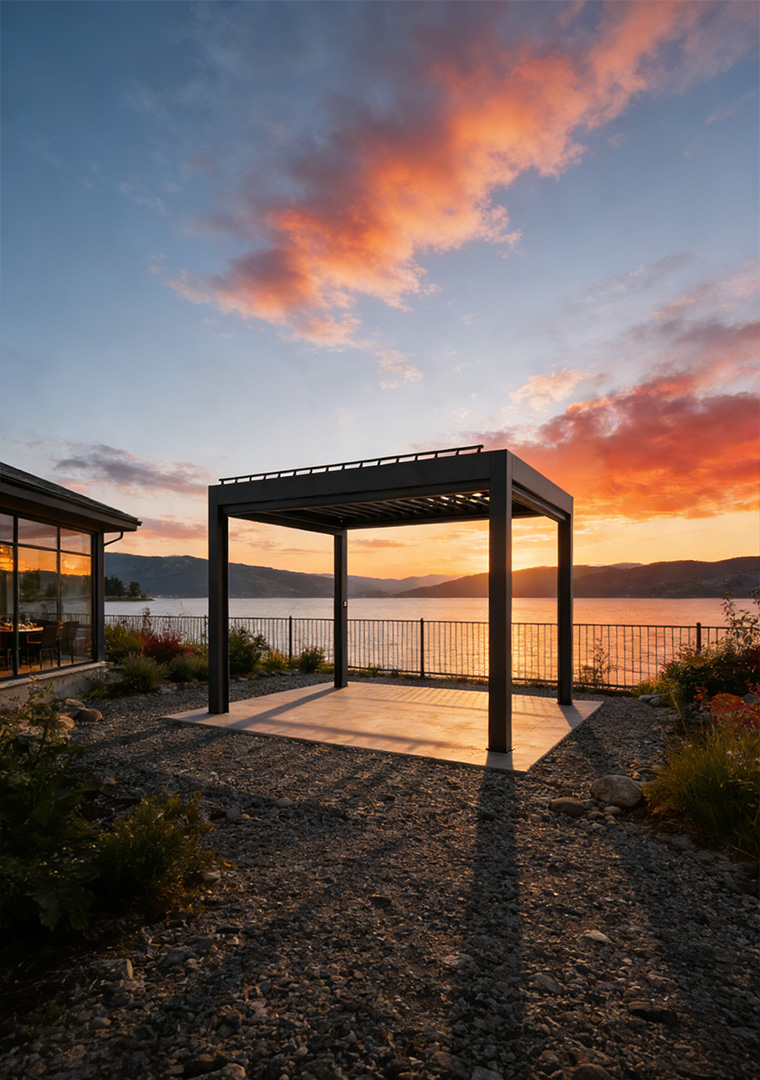
How a louvered pergola fixes the core problems
Louvered pergolas use adjustable slats (louvers) to control light and rain. Tilt the blades and you get shade; close them and water sheds. The core benefit is control: you choose airflow, sun, and privacy without changing structures. Options split by mechanism: hand-crank, motorized with remote, and fully automated systems with rain and wind sensors. Materials usually run aluminum for longevity, timber for warmth, or hybrid frames with aluminum louvers. Pay attention to blade seal quality and drainage channels — those decide whether the unit actually keeps you dry.
Must-check technical points before you buy
Weight and load ratings: know your roof or deck can carry the structure plus solar modules if you plan to add panels. Wind rating: ask for spec numbers (e.g., 90–140 km/h classes). Water management: look for integrated gutters and drainage exits, not just headset promises. Motor specs: torque matters for long louvers; cheap motors die fast. Controls: wired, wireless, and smart-home compatibility vary; pick what matches your lifestyle. Battery backup is a plus where power cuts are common.

Experience, standards, and one real-world anchor
Installers and architects use proven standards like IEC and UL for electrical and structural safety. My editorial work alongside rooftop teams and manufacturers has reinforced one clear rule: test the prototype in real weather before signing for a full build. Look at Germany’s widespread BIPV adoption for a simple lesson — they pair structure and PV early in design, not as an afterthought. That practice matters when integrating panels into moving louvers and feeds into the broader field of integrated photovoltaics, where mounting methods and electrical routing must be planned from day one.
Common pitfalls buyers make
Wrong sizing: too small feels useless; too big stresses supports. Ignoring local wind and snow loads: cheap designs fail quickly. Buying based on aesthetics alone: you need engineered details. Overlooking maintenance: louvers collect debris; hinges need grease. Skipping electrical planning: solar-ready frames still need conduit and inverter placement. Forgetting orientation: louvers and PV cells need proper tilt and azimuth for meaningful generation.
Alternatives and quick comparisons
Fixed pergolas – cheaper, simpler, but no adjustable control over sun or rain. Retractable canopies – good for sun control but poor in storms. Awnings – space-saving, cheaper, but less durable. Solar carports – better for vehicle shade and higher capacity PV, but they take more footprint. If your priority is flexible living space with some energy return, a motorized louvered pergola with planned PV integration usually balances function and value best.
How to decide: practical checklist
1) Define primary need: shade, all-weather seating, or energy generation. 2) Site survey: measure wind, sun path, and mounting points. 3) Pick material and motor rated for local conditions. 4) Require drainage detail and wind rating on the spec sheet. 5) Confirm wiring route and inverter location if you want power from the structure. 6) Ask for a weather-tested demo or video of the exact model in operation.
Final synthesis
Buyers who treat a louvered pergola like an engineered system — not a garden ornament — avoid headaches. Match purpose to product: choose motorized, sealed louvers for weather and comfort; choose lightweight fixed frames for simple shade; plan PV and wiring early if you want power. Practical solutions that pair structural detail with realistic energy expectations are what matter most, and examples from manufacturers show how a balanced approach can cover living needs and energy smartly through Light Hunter.
