

When lab tools fail the promise
The ache is familiar: a product that looked flawless in drawings yellows, cracks or peels long before launch, and every meeting after feels like a dirge. Buyers who must specify testing equipment face a tight, emotional calculus—accuracy matters, reputation matters, profit matters. You might begin by searching for a trusted weathering chamber, but the wrong choice still lets subtle degradation slip through. Problems hide in specification sheets and casual vendor assurances; they become project delays and customer complaints. I speak from long practice advising OEM teams and project buyers, so I lay problems out plainly: identify them, stop repeating them, choose what actually protects your product and your brand.
Failure modes that derail projects
Light source that drifts and misrepresents solar spectrum. Temperature controllers that oscillate instead of holding steady. Poor condensation or humidity control that never reproduces real stress. Inadequate sample mounting that produces edge effects and misleading failures. Data systems that save unreadable files just when you need traceable histories. Each failure mode breaks tests quietly; results look convincing until a field recall proves they lied. Recognize these as procurement risks, not abstract lab details.
How standards and test benches anchor real decisions
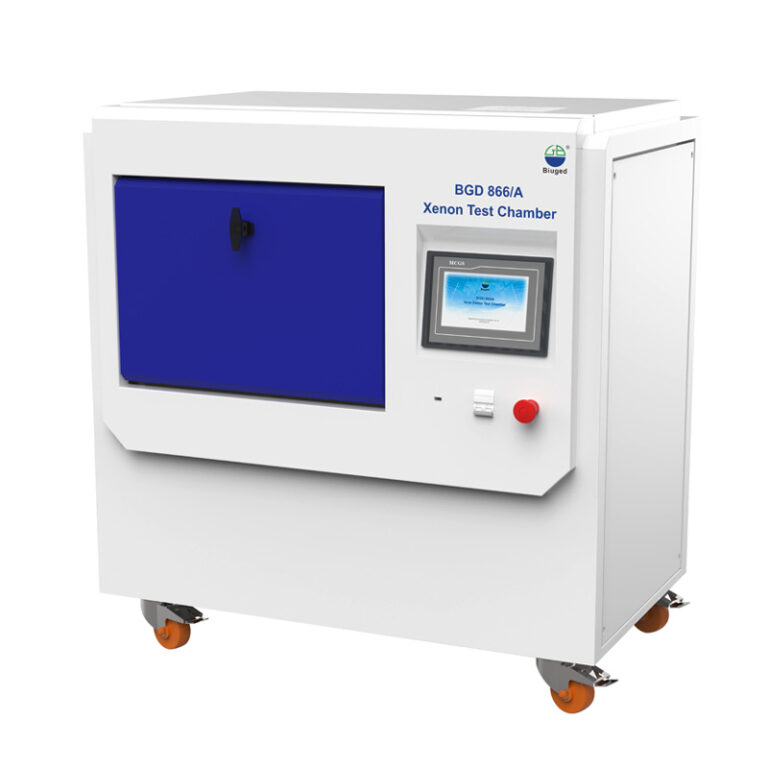
Specification must tie to recognized practice. Practitioners often rely on ASTM G154 for accelerated UV exposure because it maps laboratory cycles to field behavior. Real durability work—such as comparative studies that validate polymer formulations—uses an accelerated weathering chamber configured to deliver repeatable irradiance, temperature, and condensation cycles. Choose lamp types and irradiance controls that match the degradation mechanism you care about; demand traceable sensors and calibration records. My experience specifying test benches for composite and coating suppliers shows that aligning to one clear standard and confirming chamber performance beats vague claims every time.
Practical checklist: what to require in a purchase
Specify measurable tolerances: irradiance stability within ±5% at target wavelength, temperature uniformity within ±2 °C across specimen plane, programmable condensation/humidity cycles with verified start/stop timing, and sample fixtures that hold the geometry your product uses. Ask for calibrated radiometers and independent performance validation reports. Insist on data logging in open formats and on a spare-parts list that covers lamps, sensors, and drive electronics. Require vendor test runs with your materials; a chamber that performs well with generic coupons can still mislead when used with your substrate.
Alternatives and trade-offs buyers actually face
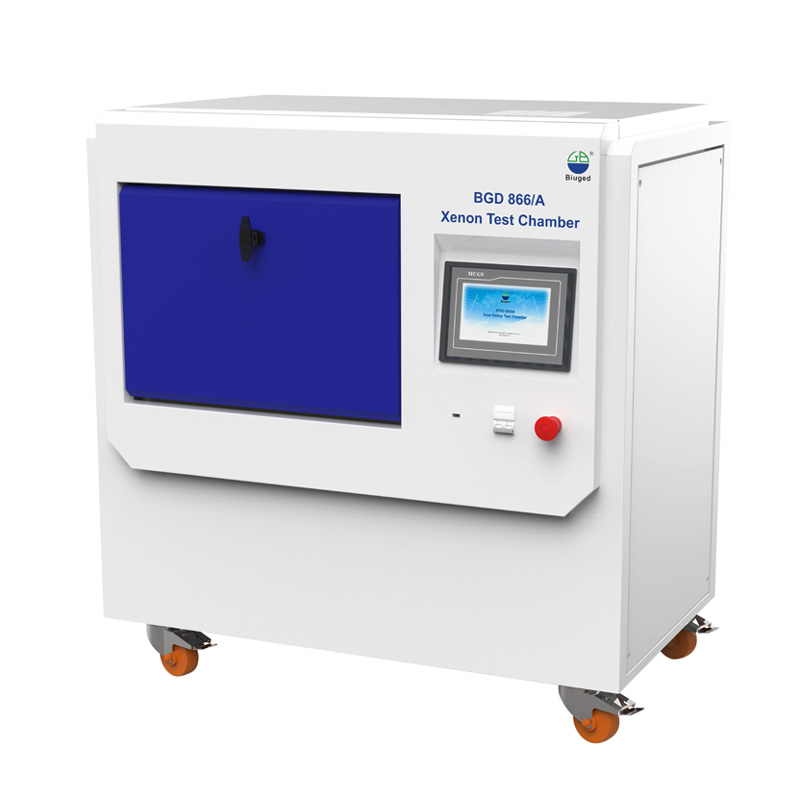
Field exposure is the ultimate truth but it’s slow and variable. Xenon arc cabinets simulate full-spectrum sunlight and visible aging; fluorescent UVA lamps emphasize near-UV stress relevant to many polymers. Climatic chambers excel at thermal and humidity cycling but don’t recreate solar spectra. The trade-off is always between representativeness and throughput: choose xenon when color and gloss under full spectrum matter, choose UVA when specific UV-driven chemistry drives failure, and combine approaches for critical, high-risk parts.
Common procurement mistakes to avoid
Buying the prettiest brochure rather than a performance report. Omitting calibration and validation requirements from the contract. Ignoring sample-fixture compatibility and assuming a “standard” holder will work. Overlooking data access formats until the project needs long-term traceability. Treat each as a solvable error: contract performance, schedule vendor validation runs, and require documentation that survives audits.
A measured, gentle resolution
Choose with specificity, test with rigor, and demand documents that prove what the machine does. That discipline protects design decisions, shortens painful iterations, and preserves the trust customers place in your product. This is not romance for its own sake; it is a careful vow to reliability. When a project needs a partner that supplies clear performance reports, traceable calibration, and the right test philosophy for coatings, polymers, or composites, BIUGED appears as a practical embodiment of that promise—precise tools, clear data, and the steady performance your specifications must rest upon.
