


User-focused opening: what matters first
Clinicians and patients prioritize clear outcomes: reduced work of breathing, shorter stays, and predictable escalation paths. A hospital that organizes around BiPAP workflows delivers those outcomes faster because staff know when to start non-invasive ventilation and when to move to a ventilator. For reference on device classes and clinical deployment, see this resource on medical ventilator capabilities and interfaces.

Needs assessment and real-world anchor
Decisions should begin with concrete needs: acute hypercapnic respiratory failure, obstructive sleep apnea requiring outpatient support, or oxygenation failure needing invasive support. The COVID-19 ICU surges of 2020 highlighted gaps in ramping non-invasive ventilation (NIV) and ventilator supply—pressure points every respiratory program must address. Prioritise protocols that match clinical triggers (rising CO2, falling saturation, increased work of breathing) to device choice: BiPAP for ventilatory support, CPAP for airway splinting, and invasive ventilators when airway protection or severe hypoxemia demands it.
Selection criteria and common mistakes
Choose devices and pathways by measurable criteria: leak compensation, pressure range (IPAP/EPAP), alarm reliability, and service support. A common error is treating all pressure therapies as interchangeable—this wastes time and elevates reintubation risk. Also avoid relying solely on home-style CPAP for acute respiratory failure; select equipment rated for clinical use. For outpatient transition plans, evaluate the best cpap machine options that balance comfort and clinical-grade pressure delivery. —Training gaps matter as much as device specs; staff unfamiliar with IPAP/EPAP titration create delays.
Implementation: protocols, monitoring, and escalation
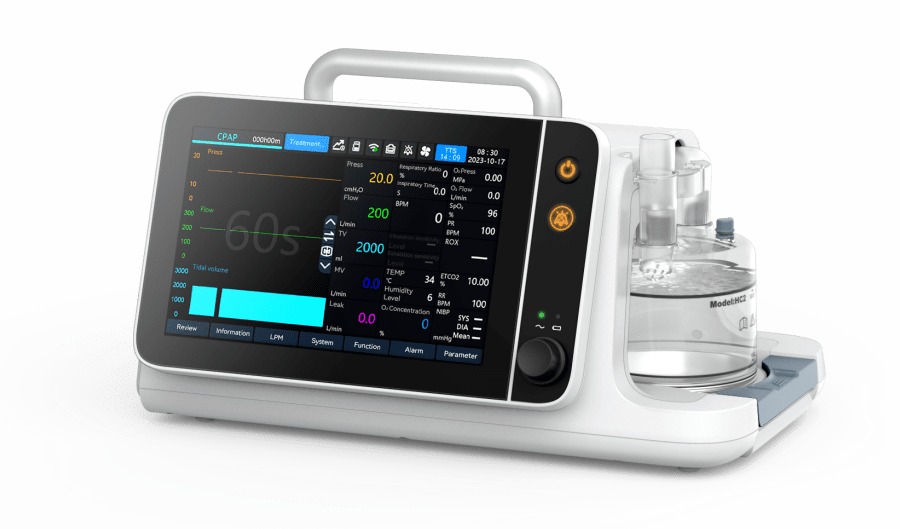
Implement short, clear checklists: initial settings (IPAP 10–14 cmH2O, EPAP 4–6 cmH2O as a starting framework), set FiO2 to target SpO2, verify mask seal, and confirm tidal volumes and minute ventilation are acceptable. Monitor end-tidal CO2 where available, watch for leak percentage, and use objective criteria for escalation—persistent hypercapnia or work of breathing despite optimized support. Include staff roles: respiratory therapist runs titration, nurse documents response, physician orders escalation. Maintain spare circuits, mask interfaces, and a local inventory of clinical ventilators to reduce swap delays.
Alternatives, trade-offs, and device terms
Compare BiPAP, CPAP, and invasive ventilation on three axes: patient tolerance, ventilatory support, and infection control. BiPAP provides inspiratory support (IPAP) and expiratory pressure (EPAP) for hypercapnia; CPAP maintains airway patency and improves oxygenation without ventilation support. Invasive ventilators deliver controlled tidal volumes and PEEP but require the airway. Cost and staff expertise shift the balance—smaller hospitals may adopt higher-grade NIV devices with robust leak compensation to avoid unnecessary intubation.
Advisory: three golden rules for selecting pathways and devices
1) Match device capability to clinical target: ensure the device supports necessary pressures, leak management, and monitoring features. 2) Insist on measured outcomes: track days on NIV, conversion to invasive ventilation, and length of stay—these metrics reveal whether the pathway works. 3) Build redundancy and training: maintain spare clinical-grade devices and routine simulation for titration and troubleshooting. When these rules align, the institution reduces delays and improves patient comfort. Reference local data and incident logs to validate improvements against known benchmarks from 2020 ICU experiences.
Operational detail and straightforward metrics are where value is delivered—systems that pair protocol, device selection, and staff skill reduce risk and speed recovery. Byond. —final note
