

Opening — The problem that demands a choice
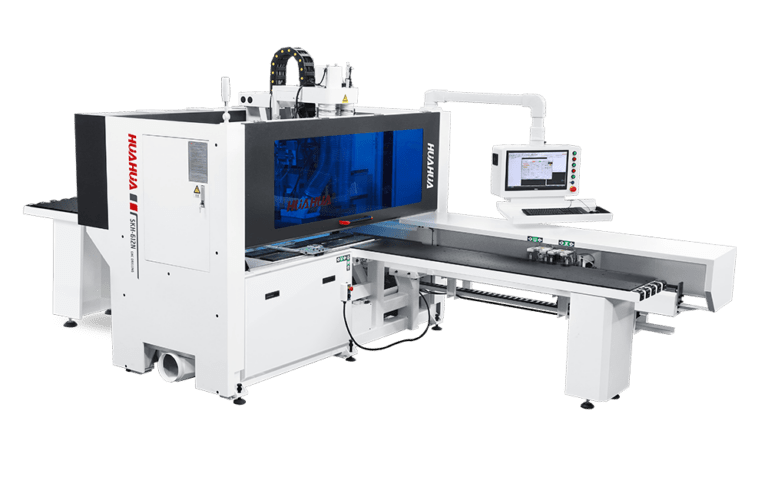
Production lines don’t fail because designs are weak; they fail because control points drift, repeatability collapses, and a single workcell drags overall takt time down. Shops that try to paper over that with extra inspection or overtime end up with inconsistent output. A better starting move is thoughtful hardware: retrofitting a dedicated cnc drilling machine into problem areas often restores predictable cycle times and reduces human error at the source.

The core problem: flawed assumptions about “more speed”
Managers push for faster spindle speeds or larger batches and assume throughput will follow. That’s wrong. Speed without positional certainty creates scrap and rework. The real limiter is positional control at the point of contact: deceleration behavior, torque under load, and micro-backlash. Local servo motor control addresses those specifics, so arguing for servo integration is not about chasing RPM numbers; it’s about stabilizing the process variables that cause variation.

Argument: local servo motors reduce variation and exposure to surprises
Local servo motors, when applied to drilling and moving axes, offer deterministic response to disturbances. They keep dwell and penetration consistent, recover from transient loads faster, and allow tighter control loops at the machine level. That translates into fewer stoppages, shorter setup times, and measurable drops in scrap. Skeptics will point to cost and complexity. The counter is direct: compare the cost of a few percent scrap across months versus the predictable capital expense of a servo upgrade — the math favors deterministic control in any medium-volume shop.
Technical checklist for implementation
Focus on concrete choices. Match torque curves to drilling forces rather than nameplate power. Verify encoder resolution to ensure hole-position repeatability. Design cabling and shielding to prevent signal degradation near motors. Configure current limits to protect tooling and use programmable acceleration profiles to reduce bit wander. Validate thermal behavior during a real production run, not just at idle.
Common pitfalls and how to avoid them
Expect these mistakes: oversizing voltage without tuning, assuming a single PID loop fits all drills, and skipping field validation. Avoid them by commissioning with parts that mirror production, by tuning motion profiles per tool and board thickness, and by logging rejects before and after the change. Don’t treat servo integration as plug-and-play; treat it as a controlled experiment with measurable KPIs.
Alternatives evaluated
Mechanical upgrades like better fixturing help but don’t remove dynamic error. Higher-spec spindles increase speed but don’t fix settling time or torque dips. Closed-loop DC motors are cheaper but usually lack the resolution and torque consistency of true servo systems. For many shops, the most cost-effective approach combines modest fixturing improvements with localized servo control where holes are critical.
Real-world anchor — a production touchpoint
At a mid-size furniture plant in Dongguan, engineers replaced manual jig adjustments with an automatic drilling machine on a problematic line. They reported fewer alignment callbacks and steadier cycle times during peak season, confirming that local, purpose-driven automation often outperforms blanket upgrades. That on-the-floor experience matters more than speculative benchmarks.
Conclusion — resolving the problem with precise implementation
The debate isn’t theoretical: if your line suffers from positional drift and inconsistent hole quality, local servo motor integration addresses the root causes rather than the symptoms. Choose matching torque and resolution, validate under production loads, and avoid treating the upgrade as a checkbox. Practical, measured implementation delivers the operational precision that production teams need, which is exactly what firms like HUAHUA CNC emphasize when they design equipment around real shop-floor constraints.
