
Introduction — Who’s Losing Energy and Why?
Ever wonder why some shops crank out motors that last and others don’t? That’s the scene I see on the floor: bits, tests, and numbers stacking up. As an electric motor manufacturer I watch throughput, failure rates, and energy draw like a hawk — and the data don’t lie (we’re talking 5–12% extra loss on some lines). What’s causing the waste—design choices, materials, or sloppy process control? That question drives everything we fix next.
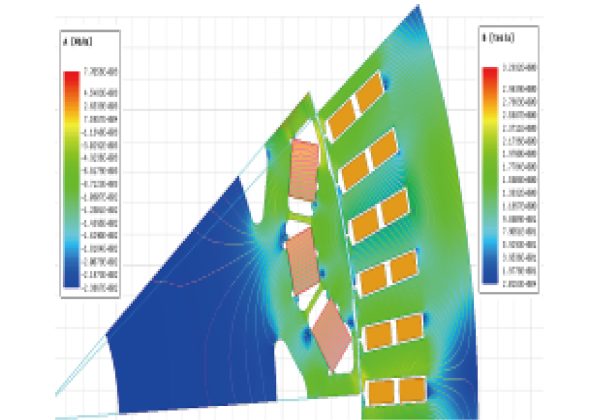
I keep it real: small changes in copper routing or control firmware can mean serious savings on torque density and power draw. NYC folks call that working smarter, not harder. So next up, I want to dig into what really breaks down in the shop — the stuff you don’t read in glossy brochures. Stick with me — we’ll go deeper.
Deeper Flaws in electric motor manufacturing
Let’s get technical for a beat. I see two big recurring flaws: mechanical tolerance drift and mismatched control hardware. Tolerance drift hits the rotor and stator alignment first. You can spec high-grade laminations and precision windings, but if the rotor rides off-center by a few mils you get vibration, heat spots, and premature bearing wear. On the control side, power converters set the IQ/ID control loops. If those converters aren’t tuned to the motor’s inductance and back-EMF profile, efficiency drops. Look, it’s simpler than you think — a mismatch here costs you real kW.
There’s also a human factor. Operators chase cycle time, not thermal maps. I’ve been there; we skim acceptable torque for faster assembly. That trade-off bites later when units return for warranty. And while advanced materials help, they mask poor process discipline. So the hidden pain isn’t always the parts — it’s when parts meet sloppy execution. Why does this stack up? Because specs and reality rarely speak the same language — and that communication gap is where failures hide.
Why does alignment matter so much?
Misalignment amplifies losses non-linearly. One small shift raises magnetic drag, spikes current, and burns efficiency. Tight tolerances are cheap compared to field service calls. I say invest in jigs and inspection — the math backs it up.
What’s Next — New Principles and a Look Ahead
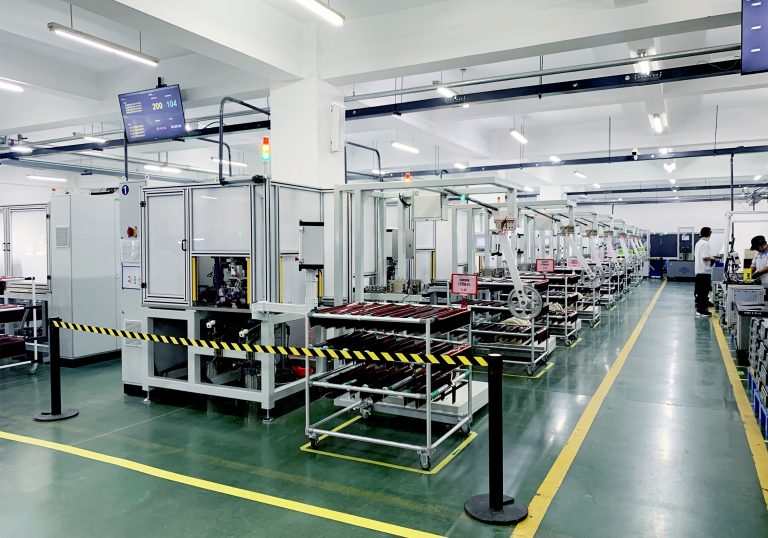
Now let’s move forward. I want to outline a few new-tech principles that actually change outcomes. First: model-driven design. Use digital twins to simulate rotor-stator interactions before you cut metal. Second: adaptive control. Let your power converters and control firmware learn the motor’s real behavior in situ — not just based on a datasheet. Third: closed-loop quality. Bring sensor feedback into assembly to catch tolerance drift early. These ideas cut rework and raise first-pass yield.
Case in point: a small run I helped with used a digital twin and adaptive inverter mapping. Losses dropped 8%. Production time? Shorter. — funny how that works, right? And for makers of marine gear, these steps matter for boat motor manufacturers too; torques and thermal behavior at sea are unforgiving. You want parts that survive vibration, salt, and long duty cycles — so design choices matter more than ever.
Real-world Impact?
Short version: these principles reduce returns and lower operating cost. They also let you push torque density without killing service life. We ran simple experiments. We tracked rotor temperature, vibration spectra, and inverter current harmonics. The data told the story. Implement the right controls and your motor behaves like it was born to last.
How to Judge Solutions — Three Metrics I Use
I won’t leave you hanging. When I evaluate a new motor process or partner, I focus on three things. One: measurable efficiency under load — not just idle specs. Two: robustness of control — how adaptable are the power converters and sensing? Three: assembly traceability — can you map every stator, rotor, and test result back to the unit? Those metrics are simple, but they separate hype from reality.
We need practical moves. Start with a pilot line. Capture baseline data. Iterate. And yes, ask your suppliers for real test logs — if they can’t show them, walk away. I stand by that. For anyone scaling up or tuning designs, these steps pay off. If you want a reference point for implementation and supply options, check out Santroll. I’ve seen the difference hands-on — and that matters when you’re building to last.