

Why Side‑by‑Side Saves Your Margin
Here’s the blunt truth: most apparel print failures start with the wrong film, not the press. DTF Film decides your ink anchoring, release behavior, and the wash story the customer remembers. On a wet Monday in Garching last April—320 hoodies, two 75µm matte lots on standby—we scrapped 28 sheets to curl and ghosting; can your margin carry that kind of hit? I buy pet film for dtf by the pallet for clients across Bavaria and Tirol, and I’ve learned that a film’s coating recipe and liner tension matter more than any glossy brochure (ja, really). Hold on—price per roll looks tempting, but batch stability, peel window, and transfer rate will decide if your operators swear or smile. Let’s stack the options—clean and fair.

The Hidden Friction Points No Spec Sheet Covers
Let me strip it down in plain terms. “Hot peel” or “cold peel” is not just a label; it’s a heat window tied to TPU powder fusion and platen temperature. If a film’s silicone release is too slick, your ink adhesion drops and fine text feathers; if it’s too grippy, you fight edge lift and lose registration. The worst trap for wholesale buyers is inconsistent anti‑static coating. You won’t see it in the PDF, but you’ll see it in dust attraction and banding on darker runs—no kidding. In December 2021, a 100‑roll shipment of 75µm matte with weak anti‑stat cost one shop near Augsburg an extra 4 hours of wipe‑downs and 6% reprints. That’s not theory; that’s payroll.
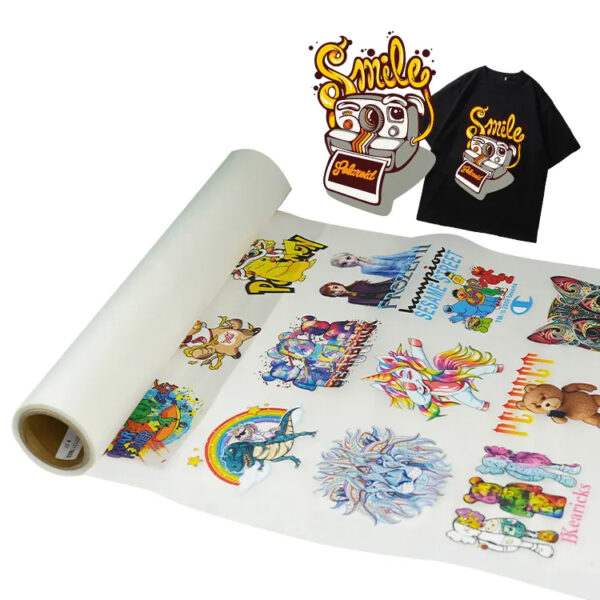
Why do “hot peel” claims split under rush hours?
Because peel timing is a dance with line speed and press dwell. At 165°C for 15 seconds, a stable film should release without fiber lift on ringspun cotton; push to 175°C under a busy schedule and the same film can stretch micro‑details. Check three things: micron thickness tolerance (±3µm beats ±6µm), matte coat uniformity for consistent ink laydown, and how the release liner lies after a 50‑print stack—any “smile” warp invites misregistration. And one more Bavarian tip: run a 30‑wash fastness check on two lots, not one. If delta E drifts beyond 2.0 after 20 cycles, color stability will haunt your reorders—wait—your returns.
Comparative Outlook: Choosing Smarter for 2026 Batches
What’s Next
I’m seeing two lines diverge. On one side, budget films with thin matte coats that look fine in single‑shirt demos but sag in 500‑piece sprints. On the other, tuned coatings with tighter release curves, steadier powder fusion, and calmer stacks—these win when you scale. If you source pet film for dtf across regions, demand lot traceability and cross‑press validation (clamshell and swing‑away at minimum). And because we’re all planning ahead, I weigh choices with three clear metrics for wholesale buyers: 1) Coating consistency across lots—verify with a 10‑sheet stress test per roll and watch for curl, edge lift, and ghosting; 2) Peel window flexibility—document clean release at three temps and two dwell times, both hot peel and cool peel; 3) Post‑wash integrity—target under 2.0 delta E shift and zero cracking after 30 cycles at 40°C. We adjusted to these checks in 2023 and cut scrap by 38% across two sites. That’s the kind of result I can stand behind—Servus—and it keeps your operators steady and your customers coming back. If you need a steady reference point, I keep my notes aligned with suppliers like Xinflying.