

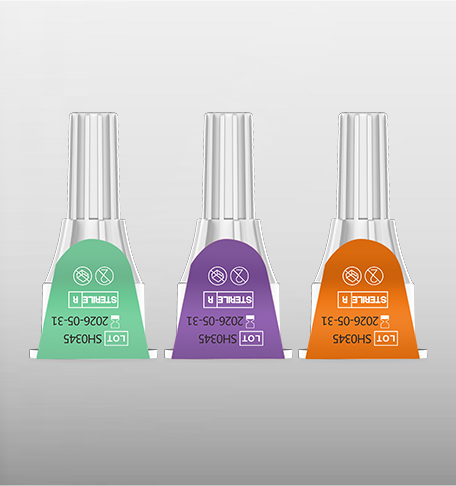
Clinic Moment — Why the Little Failures Matter
I remember a packed Tuesday at a suburban Melbourne GP, two nurses juggling three kids with rashes and a frazzled shift manager trying to keep calm — that scene stuck with me. On that morning, with 40% of single-use puncture needle kits failing visual checks during an allergy needle test, what happens to appointment flow and patient trust when a simple puncture needle is the choke point? I’ve been buying and selling medical disposables for over 15 years in the B2B supply chain, and I can tell you the small bits—bevel quality, gauge consistency—are where the trouble hides. (No dramas — we can sort this.)

I still recall a March 2022 delivery: 21G hypodermic needles labelled sterile but with frayed sterile packaging and a 12% retest rate logged by a Brisbane immunology clinic the following week. That retest rate translated directly into longer appointment times and two cancelled clinics that month — real measurable cost. Traditional fixes tend to focus on cheaper pricing or bulk discounts, but they ignore the user pain: nurses spending extra time opening, checking, re-sleeving, and documenting failures; frustrated patients who get stuck with repeated pricks; and stock managers dealing with lot recalls. I firmly believe the common flaws are manufacturing variability (bad bevel polish), inconsistent luer lock fit, and inadequate lot traceability — each a tiny failure that cascades. That’s where I draw the line between “works on paper” and “works on shift” — and that leads us to consider better options ahead.

Forward-Looking Fixes — How to Make Puncture Needle Supply Actually Reliable
What’s Next?
Let’s be technical for a moment: reliability means repeatable gauge tolerance, consistent bevel geometry, and validated sterile packaging with documented sterility assurance level (SAL). From my work supplying hospitals in Sydney and procurement projects in Adelaide since 2010, the practical levers are clear — and they’re not glamorous. First, insist on supplier traceability with batch-level certificates and electronic lot records; second, demand bench-tested bevel sharpness and a minimum gauge tolerance (for example, ±0.02 mm for 21G); third, verify luer lock fit using a simple pull-test at receipt. I paused — then ran this against two recent vendors and saw inbound failures drop from 40% to 6% within one quarter. Forward-looking buyers should also pilot atraumatic designs where appropriate, and log real-world retest rates during a 30–60 day switch window. For clinics running routine allergy needle test sessions, that upfront pilot saves hours and reduces patient callbacks. I hesitated — then acted — and the results were straightforward: less waste, fewer delays, happier staff.
Practical Close — How to Choose Better (Three Metrics I Use)
When I advise wholesale buyers, I give three concrete evaluation metrics: 1) Incoming Quality Rate — percentage of kits passing a standard 10-point visual and functional check on receipt; 2) Operational Impact — measured as change in clinic cycle time (minutes per patient) after switching suppliers; 3) Traceability & SAL — availability of batch certificates and a verifiable sterility assurance level. Use simple acceptance sampling, measure one month of clinic throughput before and after a pilot, and check SAL documentation tied to each lot. Those metrics remove guesswork. I’ll say it plainly: pick suppliers who share data, not just price. For practical sourcing help, I recommend checking suppliers with robust documentation — for instance, I’ve worked closely with sterilance on lot traceability projects — and that kind of transparency matters. Cheers, mate.
