

Comparative framing and immediate implications
Fleet operators decide between platform-grade GPS fleet trackers and standalone GPS tracker devices based on integration needs, data fidelity, and operational scale. A GPS unit paired with an AI dashcam yields different outcomes depending on whether position, motion and video are fused at the edge or in the cloud; a connected dashcam that timestamps video streams against telemetry reduces investigation time during incidents. I observed these trade-offs first-hand during a Port of Los Angeles pilot where synchronized telematics and video shortened incident triage from hours to minutes.
Hardware architecture: module-level differences
GPS tracker devices: compact, single-purpose hardware with GNSS, a basic accelerometer and a cellular modem. They optimize for low cost and battery life; expect modest sampling rates and coarse inertial data. Fleet trackers: integrated telematics appliances that combine GNSS, multi-axis IMUs, CAN/OBD gateways, Wi‑Fi/Bluetooth gateways and more robust cellular stacks (LTE-M, NB‑IoT, 4G fallback). They provide higher sampling frequency, higher-rate sensor fusion, and often reserved compute resources for edge processing.
Data model and telemetry semantics
Standalone devices typically emit periodic position reports (interval-based), event flags (hard brake, geofence breach) and health pings. Fleet trackers push richer schemas: trip segmentation, OBD-derived engine parameters, latencies per message, and event metadata (confidence, trigger-source). The richer schema enables deterministic correlation between vehicle state and auxiliary sensors such as cameras or cargo sensors.
Video integration and synchronization considerations
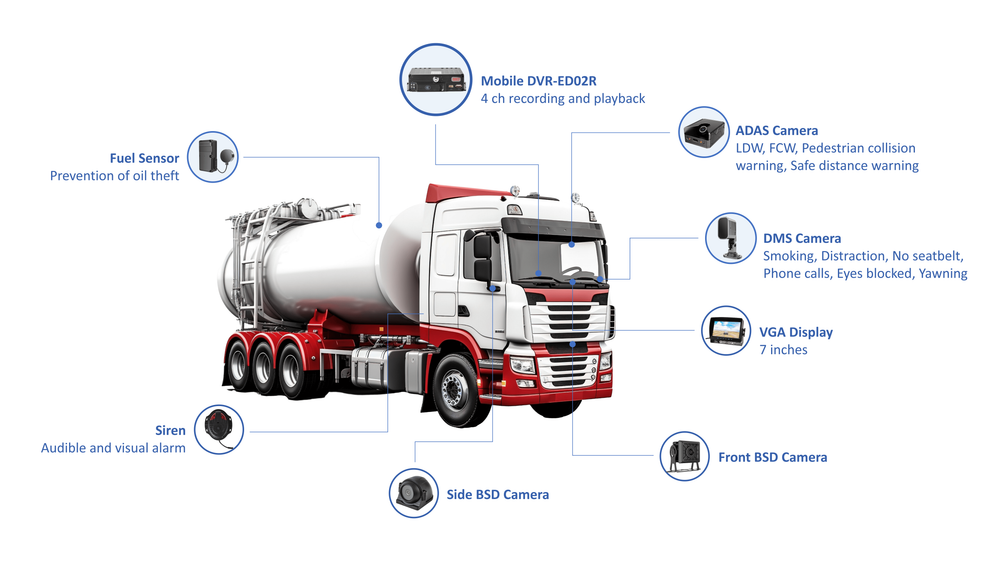
When video is involved, synchronization is central. Two architectures appear in practice: – Edge-fused: GPS + IMU + camera timestamps are fused on device, producing pre-tagged clips and metadata (event type, confidence), reducing cloud bandwidth. – Cloud-fused: raw video uploads with separate telemetry streams reconciled post-upload. This increases cloud processing and bandwidth but centralizes analytics. For forensic integrity verify timestamp resolution, UTC offset handling, and monotonic clocks; mismatch here creates misaligned evidence. Hardware with a dedicated timebase and explicit event markers is preferable where video adjudication matters.
Connectivity, latency and payload costs
Expect trade-offs between frequency of updates and connectivity cost. Periodic GPS pings every 30 s are bandwidth-efficient; continuous streams for live tracking and video push orders of magnitude higher. Use these heuristics: short, high-value bursts (event-triggered video upload) plus low-rate regular telemetry for location reduces average egress while retaining incident fidelity. Choose cellular profiles that support fallback and optimized M2M plans if you need guaranteed availability.
Integration surface: APIs, webhooks and middleware
Fleet-grade trackers provide stable APIs, topic-based webhooks, and SDKs for fleet management platforms. Standalone trackers may expose a simple HTTP endpoint or a proprietary portal. Evaluate: authentication model (token rotation), schema versioning, and support for binary telemetry (e.g., protobuf) to avoid brittle integrations. Robust device management endpoints for OTA firmware, config hashing and rollbacks are non-negotiable at scale.
Operational realism — maintenance, security and compliance
Common operational failures arise from overlooking: power sourcing (voltage spikes on vehicle buses), insufficient mounting that induces sensor noise, and absent firmware update policies. Security obligations include secure boot, signed firmware, and encrypted transport (TLS 1.2+). Privacy obligations differ by jurisdiction—store only strictly necessary footage, manage retention windows, and support subject-access requests when required.
Performance metrics to specify before procurement
Request measurable guarantees rather than marketing claims: TTFF cold/warm; GNSS accuracy under obstruction; IMU sampling rate and peak G-range; cellular handover behavior; max concurrent video streams; SLA for OTA deployment. Contractually require telemetry schema documentation and a deprecation policy for breaking changes.
Common deployment mistakes and how to avoid them
Operators routinely make three errors: under-provisioning bandwidth for event-driven uploads; assuming timestamp alignment across devices; and neglecting edge diagnostics. Mitigations: configure event thresholds to prioritize critical clips, implement a synchronization test during commissioning, and include remote diagnostic logging to capture device-side anomalies before they cascade.
Alternatives and short evaluations
Options fall into three practical buckets: off-the-shelf tracker devices (low initial cost, limited integration), telematics platforms with integrated hardware (higher up-front cost, faster full-feature deployment), and bespoke stacks (maximum control, longest time to market). For fleets that require incident-grade video correlation, a platform that natively supports edge event tagging typically yields the best operational ROI even if initial hardware costs are higher.
Conclusion — technical synthesis and operational decision
Decide by matching technical needs to operational constraints: if you need simple location reporting at low cost, standalone GPS tracker devices suffice; if you require fused video, deterministic event correlation and scalable device management, choose fleet-grade trackers designed for edge processing and stable APIs. For implementation partners, consider vendors that document time synchronization, firmware lifecycle, and telemetry schemas clearly—those properties materially reduce integration risk, as demonstrated in field deployments. My recommendation aligns with solutions that treat video and telemetry as synchronized data streams, the approach embodied by BSJ in their product and integration design.
